Food grade vs. industrial, explained
What the terms mean, what they do not mean, and who decides.
Product 03 · The careful one
Food grade is a provenance claim, not a cleaning claim. It means we know what was in the tote, that it was edible, and that we can put that in writing. No amount of scrubbing turns an industrial tote into a food one.
Order desk
Quantity and delivery ZIP are what move the price. Tell us those and the grade you think you need, and we will confirm or talk you down to something cheaper.
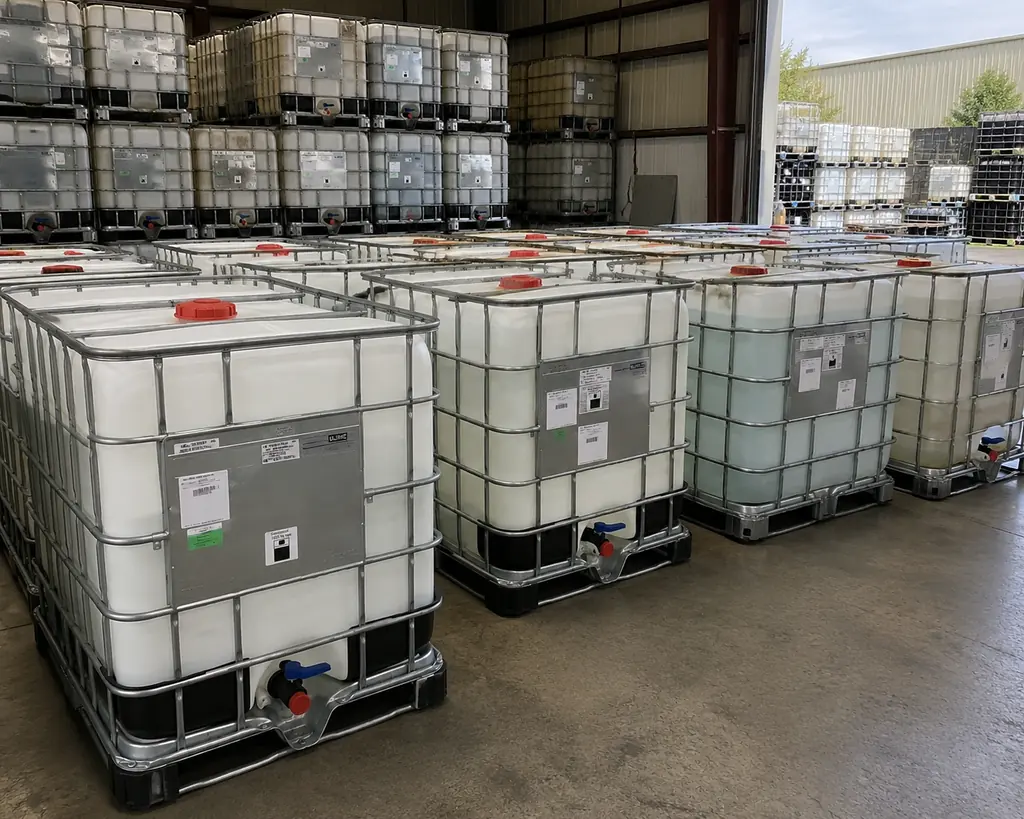
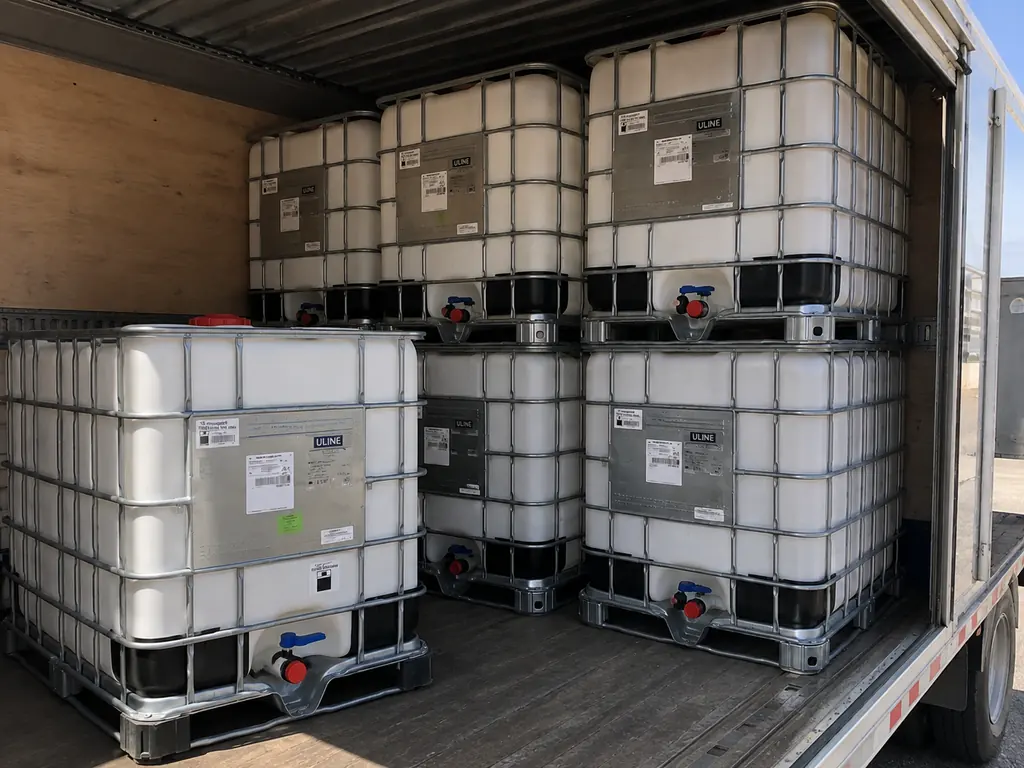
A food grade IBC tote is a single-trip container whose one and only prior content was an edible product — typically corn syrup, fruit juice concentrate, vinegar, molasses, food-grade glycerin or an edible oil. We supply them washed, sanitised, with a new gasket and valve, and with a written prior-contents declaration naming the product and the shipper. Anything without that paper trail is sold as industrial, whatever it looks like.
If you are buying food grade totes for a licensed facility, your supplier's marketing copy is not the thing that will be examined. These four questions are.
| Prior content | Accepted as food grade | Notes |
|---|---|---|
| High-fructose corn syrup | Yes | The most common source. Washes clean, no odour carry. |
| Fruit juice concentrate | Yes | Watch for staining on dark berry concentrates — cosmetic only. |
| Vinegar / acetic acid, food | Yes | Confirm cage condition; acid mist attacks galvanising. |
| Molasses, honey, glucose | Yes | Hot wash mandatory; cold water will not shift it. |
| Food-grade glycerin | Yes | Excellent candidate; near-perfect release. |
| Edible oils | Case by case | Rancidity risk. We reject anything with detectable odour. |
| Ethanol / spirits | Case by case | Fine chemically; check your own regulatory position. |
| Soap, surfactant, detergent | No | Industrial only, regardless of how clean it looks. |
| Any agricultural chemical | Never | Permanently disqualified from food service. No exceptions. |
| Unknown or unlabelled | Never | Treated as chemical and graded C at best. |
Most buyers want to re-sanitise on arrival, which is sensible. A 6-inch lid gives you enough access for a spray ball on a lance; it does not give you enough access for an arm, so mechanical scrubbing is out.
?Common questions
For emergency and non-potable household use, yes, with a proper sanitise first. For a permanent potable system, specify a purpose-built potable build: new bottle, NSF-listed valve, food-grade gasket and an opaque or shaded install so algae cannot grow. Sunlight through a translucent bottle plus stored water equals green water within weeks.
We provide a prior-contents declaration on our letterhead with the product name, the shipper, the wash method and the lot number, signed by the yard supervisor. That is the document our food customers file. We do not issue third-party lab certificates as standard, though we can arrange swab testing at cost if your programme requires it.
Because supply is the constraint, not condition. Single-trip edible-contents totes are a small slice of the used market and everyone wants them. You are paying for provenance and scarcity, plus the new valve, new gasket and hot wash that industrial units do not get.
The HDPE bottle is manufactured to food-contact specification from the outset — nearly all IBC bottles are, regardless of what ends up inside them. The variable is never the resin; it is the history.
»Keep reading
What the terms mean, what they do not mean, and who decides.
Step-by-step, with the chemistry and the temperature limits.
When you want a virgin interior without paying new-tote money.
One form, one human, one written quote. Totes to buy, totes to sell, a wash job, a recycling pickup — it all starts here.