Reconditioned vs. rebottled, in detail
A longer comparison with the decision tree we use on the phone.
Product 02 · The clever one
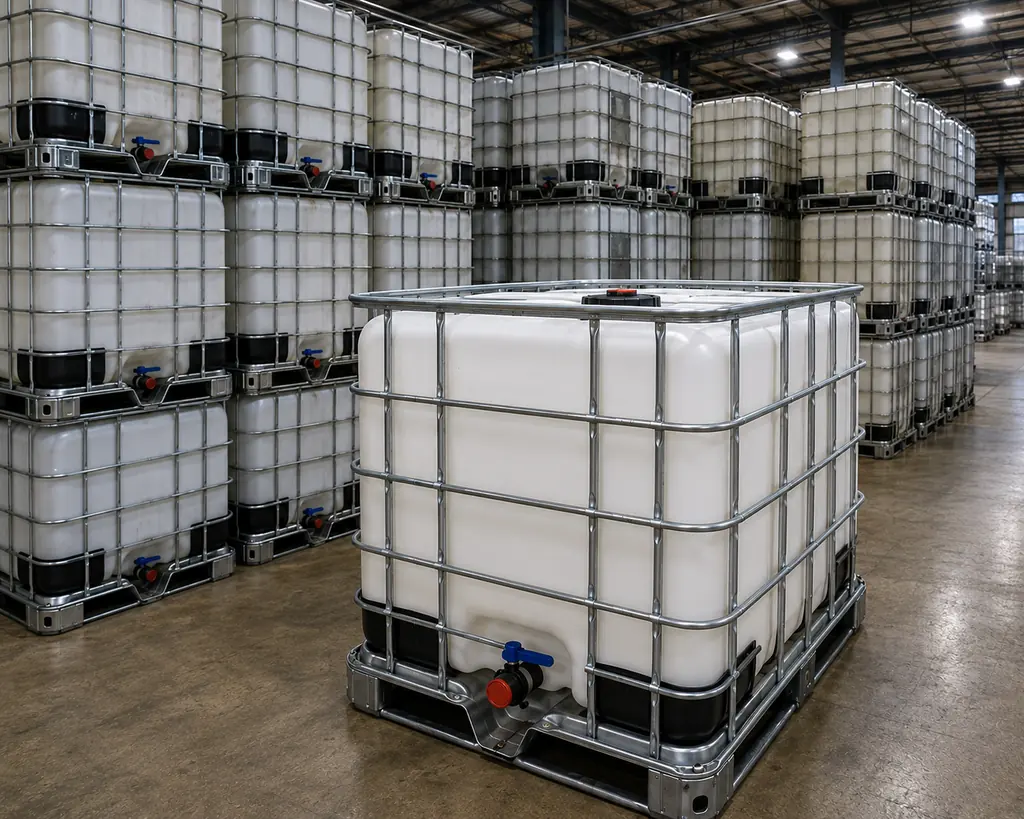
The cage outlives the bottle roughly three to one. Rebottling exploits that: we keep the steel, replace the plastic, and hand you a container with a virgin interior and a second-hand carbon footprint.
Order desk
Quantity and delivery ZIP are what move the price. Tell us those and the grade you think you need, and we will confirm or talk you down to something cheaper.
A rebottled IBC tote pairs a brand-new, never-filled HDPE bottle with a reclaimed and straightened steel cage and pallet. You get the interior cleanliness of a new tote — no prior contents, no staining, no odour — for roughly 40–55 % less money and around 55 % less embodied carbon, because the heaviest, most energy-intensive component is reused rather than remade.
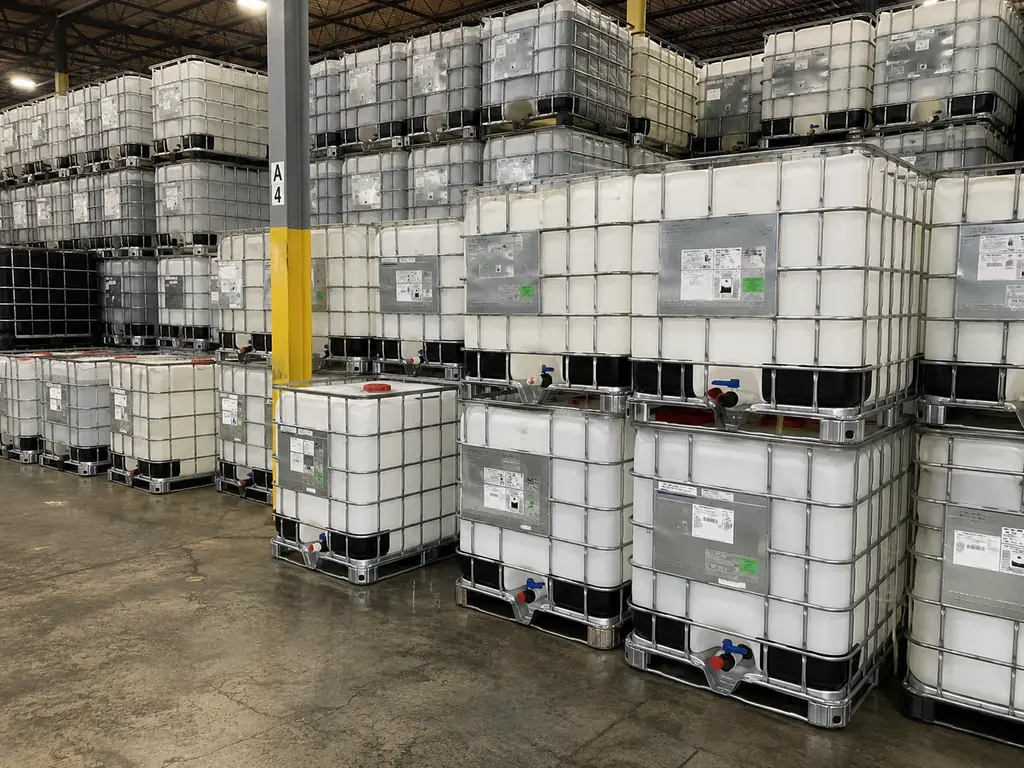
An IBC is really two products bolted together. The bottle is a blow-moulded HDPE vessel that is chemically attacked from the inside and UV-attacked from the outside, and which permanently takes on the character of whatever it held longest. The cage is galvanised steel tube that is essentially inert and fails only from mechanical abuse.
In practice we see bottles retire after one to three service lives and cages retire after four to eight. That mismatch is the whole business case. Scrapping a perfectly sound cage because its bottle is stained is like scrapping a car because the seats are worn.
| Component | Mass | Typical service lives | Usual retirement cause |
|---|---|---|---|
| HDPE bottle | 39 lb | 1–3 | Staining, odour, UV chalking, stress crack |
| Steel cage | 66 lb | 4–8 | Forklift strike, unrepairable weld |
| Composite pallet | 22 lb | 3–6 | Cracked deck, broken foot |
| Valve assembly | 3 lb | 1–2 | Seat wear, seized handle, gasket set |
| Reconditioned B | Rebottled R | New | |
|---|---|---|---|
| Indicative unit price | $105–$165 | $189–$329 | $310–$470 |
| Interior | Prior contents present | Never filled | Never filled |
| Prior-contents disclosure | Required | Not applicable | Not applicable |
| Embodied CO₂e vs new | ≈ 12 % | ≈ 45 % | 100 % |
| Food-contact capable | A grade only | Yes | Yes |
| Lead time from Austin | Same week | 3–7 days | 2–4 weeks |
| Expected service lives left | 1–2 | 2–3 | 3–4 |
The pattern most buyers land on: reconditioned for anything that touches water, wash-down or waste; rebottled for anything that touches product; new only where a customer contract or an insurer specifically demands it.
?Common questions
The bottle is virgin FDA-compliant HDPE and has never held anything, so yes for the great majority of food applications. What a rebottle cannot do is carry a food-safety audit trail for the cage — if your auditor requires documented provenance on every component, you want a new tote. For everyone else, the bottle is the only part that touches product.
Yes, and it is usually the cheapest option of all if your cages are in good order. Send us the fleet, we rebottle at a per-unit price, granulate your old bottles and credit you the resin value against the invoice. Most customers see 20–30 % off the rebottle price from that credit alone.
275 gallon and 330 gallon in natural HDPE as standard. We also stock black UV-stable bottles for outdoor and light-sensitive products, and vented-lid bottles for anything that off-gasses. Ask on the form and we will confirm stock before quoting.
Three to seven days for stock quantities. Bottles are the constraint, not labour — if we have your size on the floor we can turn 100 units in a week.
»Keep reading
A longer comparison with the decision tree we use on the phone.
Granulation, regrind grades and who buys the output.
Our published emission factors, open to challenge.
One form, one human, one written quote. Totes to buy, totes to sell, a wash job, a recycling pickup — it all starts here.