We buy your used totes
Photos in, price out the same day. We collect on our own trucks.
Cash or credit
Services
Most container yards buy and sell. We also wash, rebuild, haul, recover and granulate — which is exactly why we can afford to be honest with you about which of those you actually need.
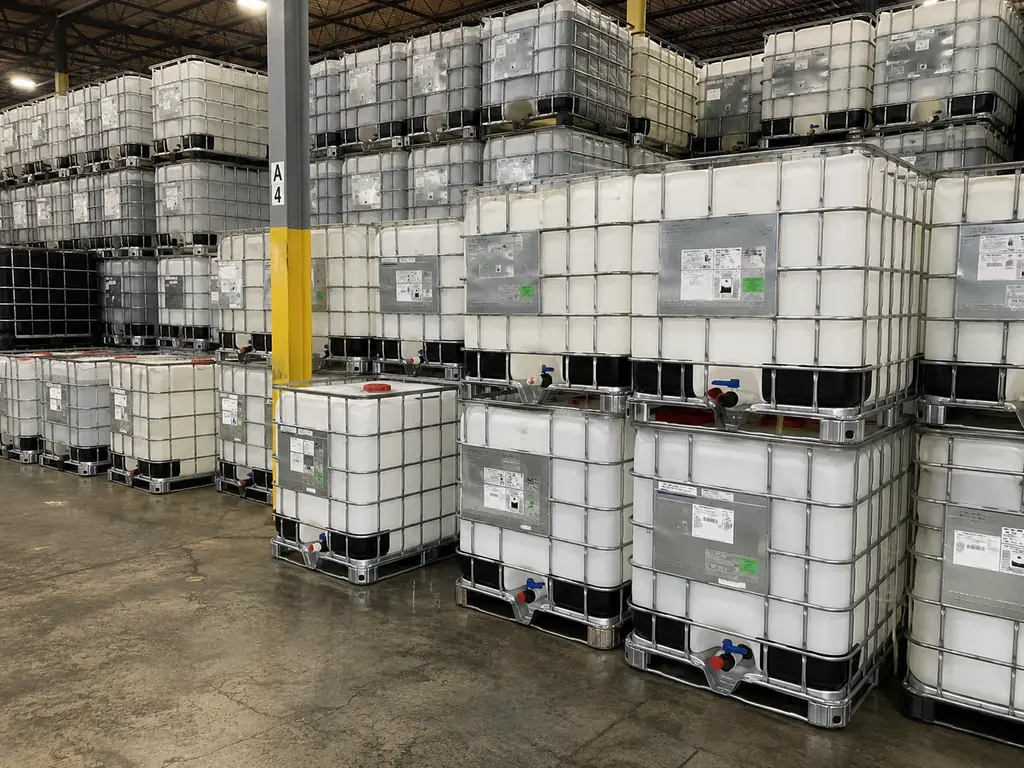
Order desk
Pick the closest service on the form and describe the situation. If you have picked the wrong one we will move it — nobody loses a quote over a dropdown.
The six services form a loop rather than a menu. A container we buy from you gets washed, rebuilt and sold to someone else; when it comes back the third time it gets rebottled; when the cage finally dies it gets granulated and baled. Freight moves it between those stages, and asset recovery is that loop run as a programme across many sites at once.
01The services
Photos in, price out the same day. We collect on our own trucks.
Cash or credit
Your totes, our wash line. Documented, tested and returned.
3-day turnaround
Granulated HDPE, baled steel, weigh tickets, diversion certificates.
96 % recovered
Full loads, LTL, hot shots and cheap backhaul across the Texas triangle.
Own fleet
Scheduled take-back, asset reconciliation and audit-ready reporting.
Multi-site
Cut, plumb, manifold, insulate, brand. Prototypes to production runs.
Send a sketch
02The loop, measured
Figures for Q2 2026, taken from unit counts and scale-certified weigh tickets. We publish the landfill number too, because a diversion figure without a denominator is marketing.
03Turnaround
| Service | Lead time | Constraint |
|---|---|---|
| Yard collection of stock | Immediate | What is on the sales row |
| Austin metro delivery | Next day | Truck availability |
| Buy-back collection, Austin | 1–3 days | Any quantity |
| Buy-back collection, statewide | 3–10 days | 20-unit minimum, routing |
| Reconditioning, L1–L2 | 3 business days | Wash line capacity ≈ 260/week |
| Reconditioning, L3–L4 | 4–6 business days | Capacity ≈ 140/week |
| Rebottling | 3–7 days | Bottle stock, not labour |
| Custom fabrication | 1–2 weeks | Component sourcing |
| New tote supply | 2–4 weeks | Manufacturer lead time |
?Common questions
Buy-back. Send a count, a ZIP and four photographs and a written banded price comes back the same day. We price whole stacks rather than cherry-picking, so the damaged units in the corner leave with the good ones instead of becoming your disposal problem.
Both. Reconditioning is sold as a per-unit service on customer-owned fleets — you keep the assets, we wash, test and rebuild them and return documented wash records. Wash line capacity is roughly 260 units a week at L1–L2 and 140 at L3–L4, which is what sets the turnaround.
Stock on the sales row can be collected immediately and delivered next day inside the Austin metro. L1–L2 reconditioning is three business days, L3–L4 four to six, rebottling three to seven days depending on bottle stock, and custom fabrication one to two weeks.
Not on qualifying buy-back loads. Twenty units or more anywhere we run, or any quantity inside Austin, is collected free. Below that threshold freight usually exceeds the value of the containers, and we will say so rather than quietly quoting it.
That is the normal case rather than the exception. A single visit routinely drops reconditioned stock, collects your empties, takes the scrap for granulation and leaves a weigh ticket behind. Asset recovery is that combination run as a scheduled programme across many sites.
◆On the yard
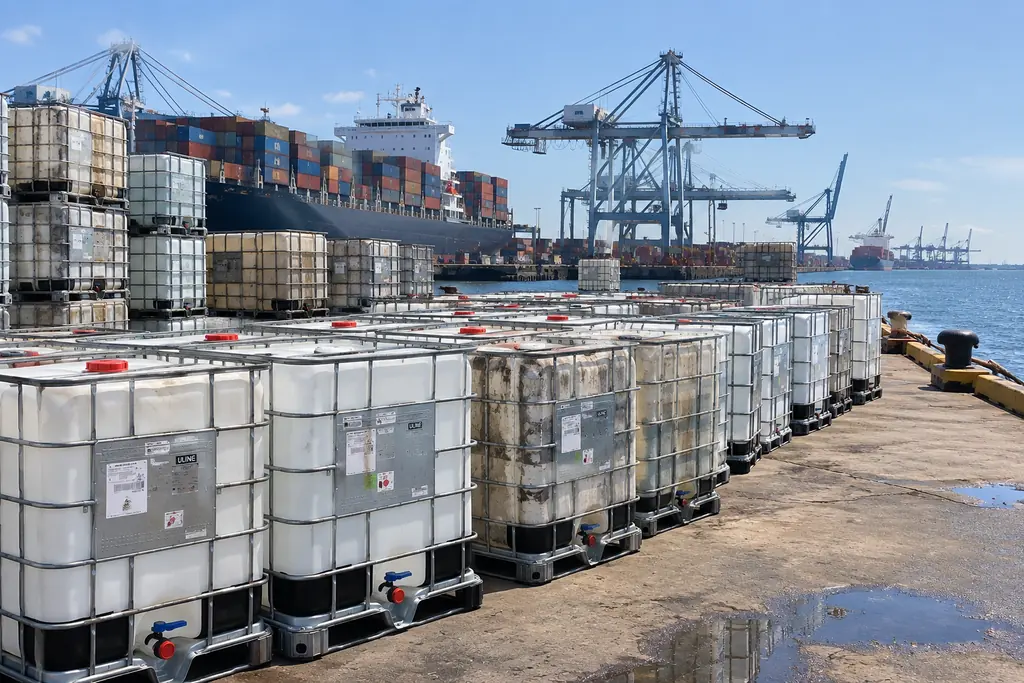
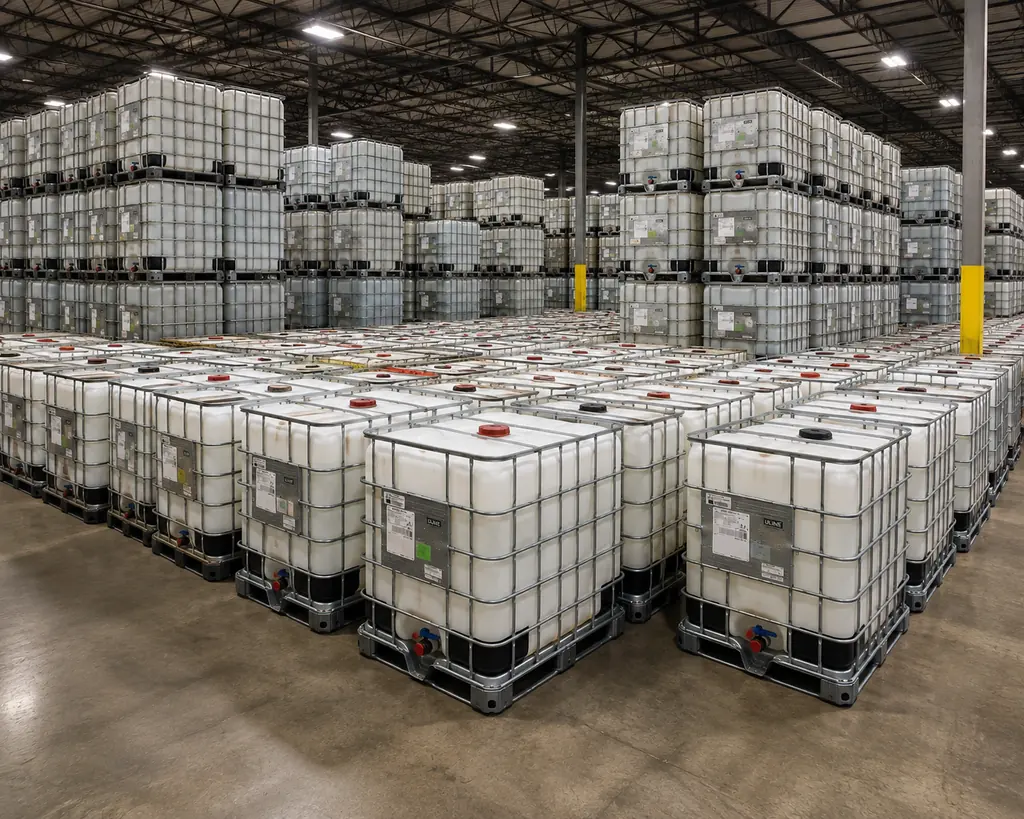
One form, one human, one written quote. Totes to buy, totes to sell, a wash job, a recycling pickup — it all starts here.