IBC Totes TXReclaim · AustinGet a quote
Navigate the yard

Austin Yard

3505 Montopolis Dr, Austin, TX 78744
hello@ibctotestx.com

Service 05 · For fleets

Asset
recovery

One stack of totes behind one building is a transaction. Forty sites, three thousand containers and a sustainability report due in March is a programme. This is the programme.
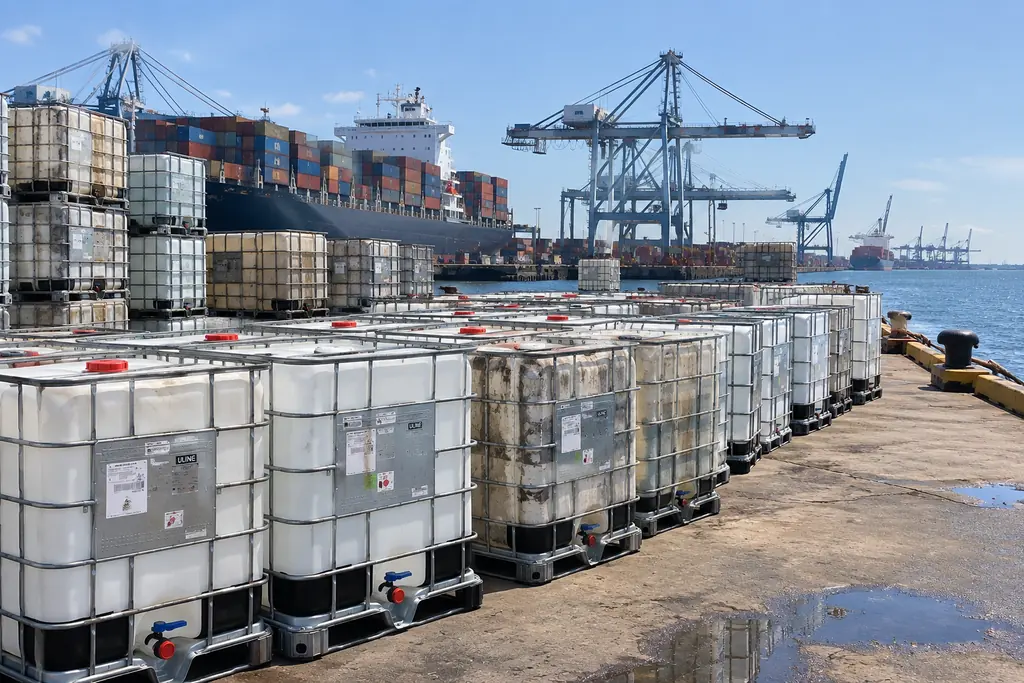
A long line of used IBC totes on a quayside with container cranes and a cargo ship in the background

Order desk

Book this in

Counts, ZIP and what the containers last held. That is enough for us to come back with a real number rather than a range.

A working address — the quote comes back here.

US or Canada only, in the format (XXX) XXX-XXXX.

US state or Canadian province — name or two-letter code.

US ZIP (XXXXX or XXXXX-XXXX) or Canadian postal code (A1A 1A1).

26 totes fill a 53-foot trailer single-stacked.

Quotes are written by a human in the Austin yard, usually the same day. We never sell or share what you send us.

The short answer

Our asset recovery programme handles containers across multiple sites on a scheduled basis: agreed collection triggers, per-site reporting, asset number reconciliation, refurbishment credit against future purchases, and a consolidated quarterly diversion statement suitable for ESG and audit use. It suits organisations running 200 or more containers, or any operation whose packaging appears in a published sustainability report.
  • Scheduled or trigger-based collection across any number of sites
  • Asset number reconciliation — we tell you which containers came back
  • Refurbishment credit applied against future container purchases
  • Consolidated quarterly diversion statement, per site and in total
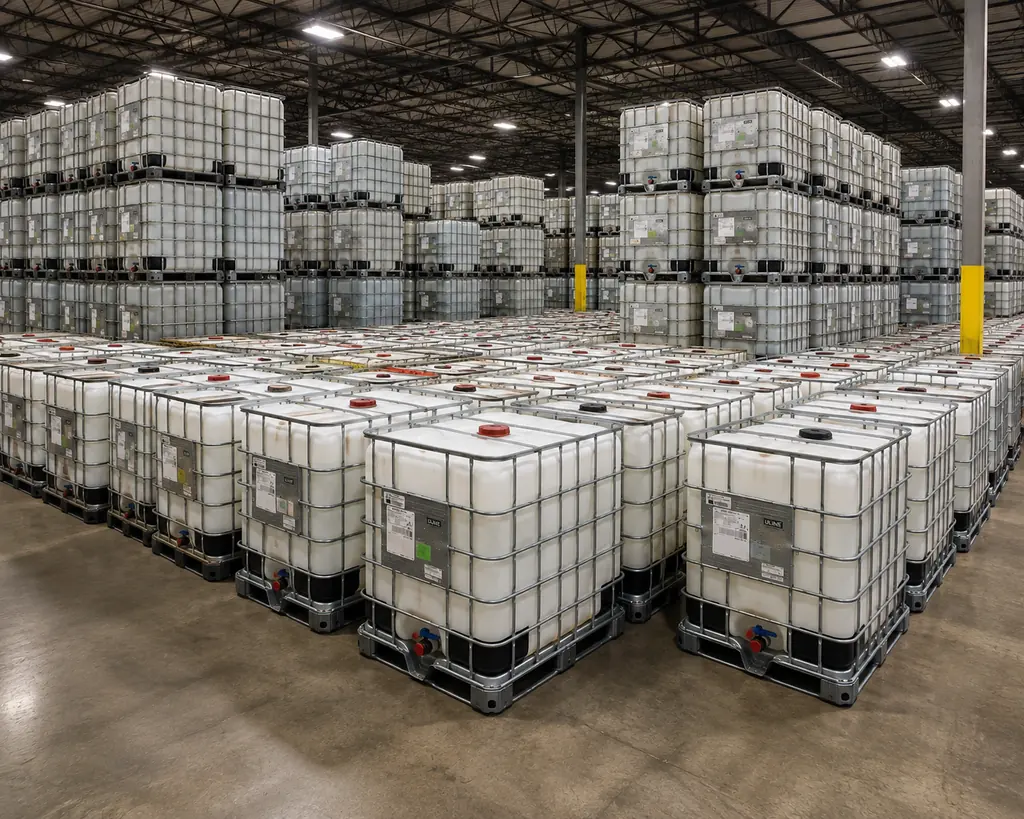
A wide view down a warehouse filled with hundreds of IBC totes stacked in rows under overhead lighting
The floorRoughly forty thousand containers pass through the yard each year. Around 83 % leave as containers.

What a programme looks like in practice

  1. Baseline. We count what you have, where it is and what condition it is in. Most customers discover 10–20 % more containers than their system says they own.
  2. Trigger definition. Collection on a schedule, on a count threshold, or on a call. Threshold triggers are cheapest; scheduled is easiest to plan around.
  3. Routing. Sites are clustered onto runs so a truck serves three or four in a day rather than one.
  4. Grading and reconciliation. Every unit is graded in against its asset number and you get the list back.
  5. Disposition. Reconditioned back to you, rebottled, resold on your behalf, or recycled with a certificate — your call, per grade band, agreed once and applied automatically.
  6. Reporting. Quarterly statement per site and consolidated: units recovered, units returned to service, tonnage diverted, CO₂e avoided against a virgin-purchase baseline.

The reporting, and what it is honestly worth

Sustainability reporting attracts a lot of arithmetic that does not survive contact with an auditor. We keep ours conservative and traceable: every figure comes from a weigh ticket or a unit count, the emission factors are published, and we state our assumptions rather than burying them.

  • Units recovered, by site, by month, by grade band.
  • Units returned to service versus units recycled — the reuse rate, which is the number that actually matters.
  • Tonnage by material stream, from scale-certified weigh tickets.
  • CO₂e avoided, calculated against a stated virgin-purchase baseline with the factor table attached.
  • Landfill tonnage. Yes, we report the 4 % too. A report without a denominator is marketing.
If a number in our report cannot be traced to a weigh ticket or a unit count, it does not go in the report.
— Our reporting rule, in the programme contract

Who this is for

  • Chemical blenders and distributors shipping in customer-owned or deposit containers.
  • Food and beverage manufacturers receiving syrup, concentrate or oil in bulk across several plants.
  • Municipalities and utilities running chemical dosing across many small sites.
  • Agricultural cooperatives consolidating containers from member operations.
  • Anyone whose containers carry their branding and who would rather they did not turn up at a flea market.
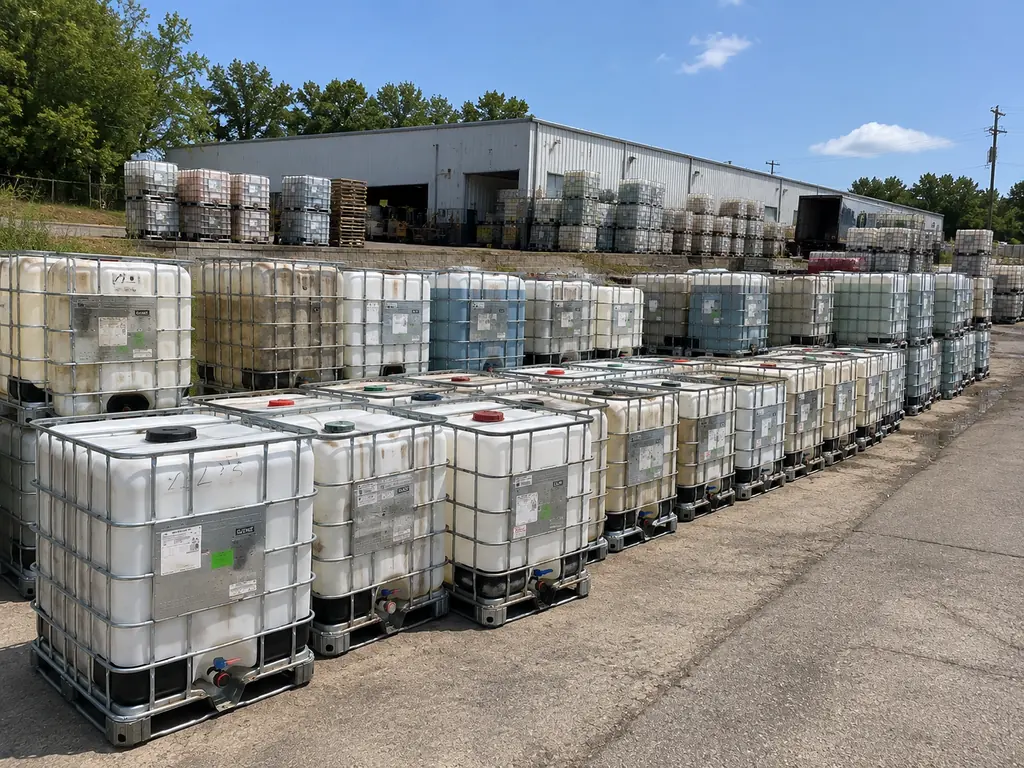
Weathered and discoloured used IBC totes lined up outdoors in front of a warehouse, showing a range of staining and cage condition
Intake, ungradedArrivals before grading. Staining is cosmetic; a crease in the sidewall is not, and that is what we look for.
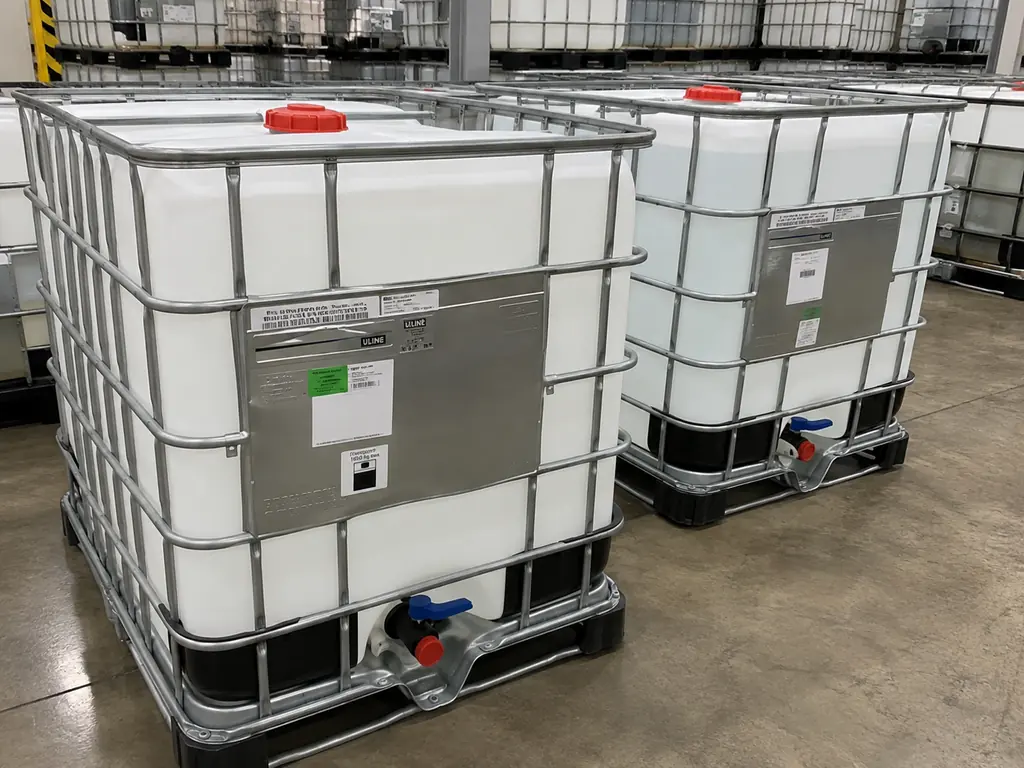
Two reconditioned 275 gallon IBC totes side by side on a warehouse floor, clear HDPE bottles in galvanised cages with red lids and blue ball valves
Graded and readyTwo 275 gallon units off the sales row — washed, new gaskets, valves rebuilt, photographed before they ship.

?Common questions

Questions people actually ask

What is the minimum size for a programme?

Around 200 containers in circulation, or roughly 40 recoveries a quarter. Below that a standing buy-back arrangement gives you the same money with less paperwork, and we will tell you so.

Can you handle sites outside Texas?

Within the five-state region on our own network. Beyond that we can coordinate with regional partners, but we will be straight with you about where we are managing a subcontractor rather than driving the truck ourselves.

Do you buy the containers or process them for us?

Either. Some customers sell the asset outright at each recovery; others retain title and pay us to refurbish and return. The second model works better if your containers are branded or specified.

How do you handle branded containers you cannot resell?

Destroy and certify, or de-brand where the marking is a label rather than moulded. What we will not do is quietly resell a container with your name on it — that risk belongs to nobody but you, and we are not going to create it.

»Keep reading