IBC Totes TXReclaim · AustinGet a quote
Navigate the yard

Austin Yard

3505 Montopolis Dr, Austin, TX 78744
hello@ibctotestx.com

Service 01 · We pay you

We buy
your used totes

Empty totes stacked behind your building are not waste, they are inventory you are paying to store. We will value them from photographs, collect them on our own trucks and pay you inside a week.
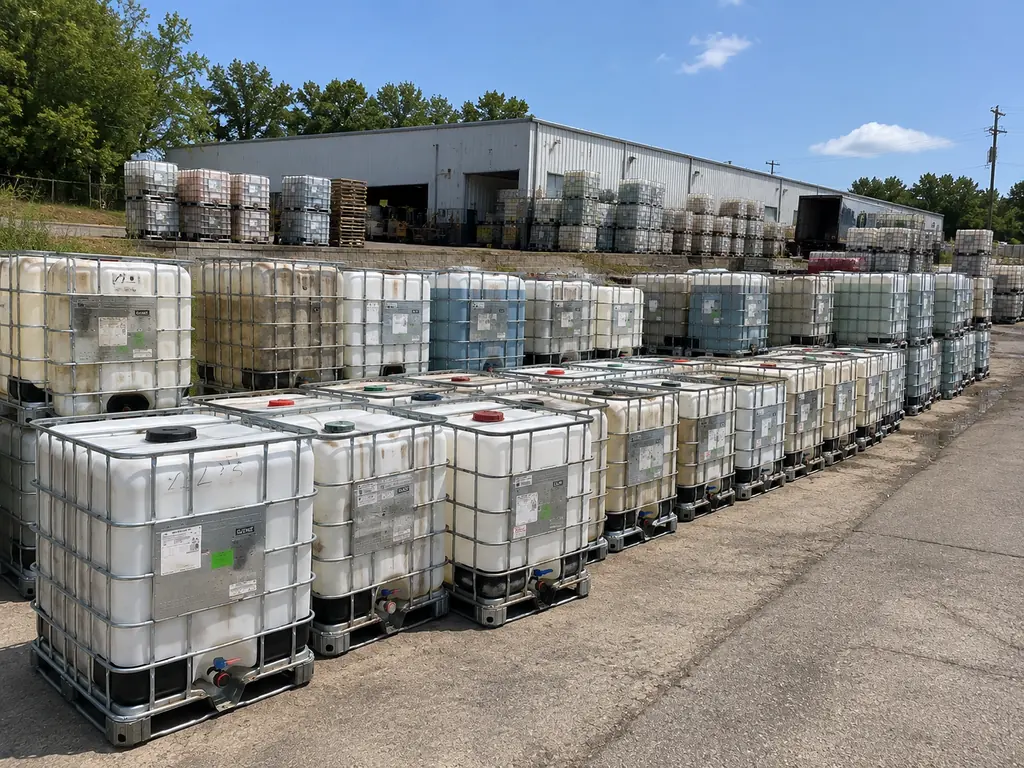
Weathered and discoloured used IBC totes lined up outdoors in front of a warehouse, showing a range of staining and cage condition

Order desk

Book this in

Counts, ZIP and what the containers last held. That is enough for us to come back with a real number rather than a range.

A working address — the quote comes back here.

US or Canada only, in the format (XXX) XXX-XXXX.

US state or Canadian province — name or two-letter code.

US ZIP (XXXXX or XXXXX-XXXX) or Canadian postal code (A1A 1A1).

26 totes fill a 53-foot trailer single-stacked.

Quotes are written by a human in the Austin yard, usually the same day. We never sell or share what you send us.

The short answer

We buy used IBC totes across Texas and the surrounding states. Send photos and a count; we return a written per-unit price the same day, banded by condition. On qualifying loads — generally 20 units or more, or any quantity inside the Austin metro — collection is free and comes off our own fleet. Payment is by ACH within five business days of the load being graded in, or as trade credit at a premium if you would rather take totes back.
  • Free collection at 20+ units statewide, any count inside Austin
  • Written per-unit pricing before we roll, banded A / B / C / scrap
  • ACH inside five business days, or trade credit at a 15 % premium
  • We take the scrap too — no cherry-picking the good ones and leaving you the rest
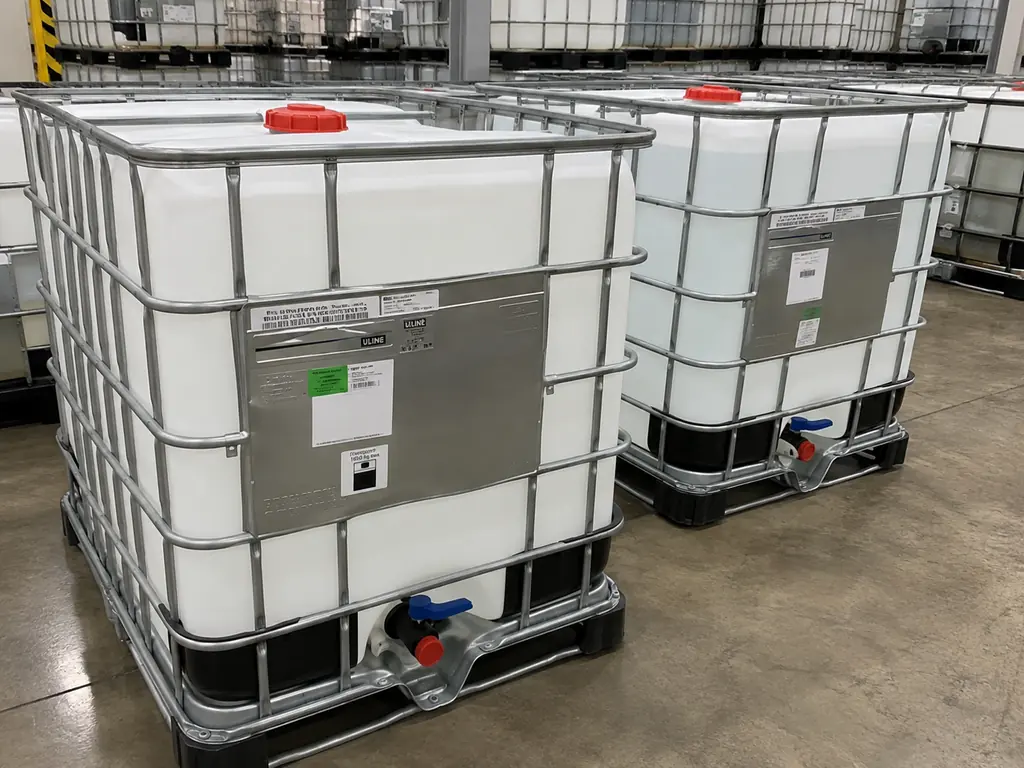
Two reconditioned 275 gallon IBC totes side by side on a warehouse floor, clear HDPE bottles in galvanised cages with red lids and blue ball valves
Graded and readyTwo 275 gallon units off the sales row — washed, new gaskets, valves rebuilt, photographed before they ship.

What your totes are worth, and what moves the number

Nobody likes a supplier who will not talk price until the truck is loaded, so here is the honest structure. Five things set the number, in roughly this order of importance.

  1. Prior contents. A documented food or benign-industrial history is worth multiples of an unknown one. "We think it was soap" costs you money.
  2. Quantity. Twenty units on one pad is a different transaction from twenty units across four sites.
  3. Cage condition. Square and unrepaired versus bent and welded is the difference between resale and rebottle stock.
  4. Bottle condition. Clear beats hazed beats stained. Cracks mean scrap value only.
  5. Location. We route around Austin, San Antonio, Houston and DFW constantly. Off-corridor pickups cost more to reach.
Indicative buy-back bands, collected, per unit
Condition inWhat it becomesIndicative range
Food history, clear bottle, square cageA-grade resale$55–$95
Clean industrial, sound bottleB-grade resale$30–$55
Stained or hazed, sound structureC grade or rebottle donor$15–$30
Cracked bottle, sound cageRebottle donor$12–$22
Damaged throughoutGranulation and steel recovery$4–$10
Agricultural chemical historyRegulated disposalQuoted case by case

How a sale runs, start to finish

  1. You send a count, a ZIP and four photos: the stack, one bottle interior through the lid, one valve, one data plate.
  2. We return a written banded price and a collection window, usually the same day.
  3. You confirm. If the load is regulated or the history is unclear we will ask for an SDS before we commit.
  4. Our truck arrives with straps and a forklift, or with a driver expecting yours — we agree that up front, and it is the single most common source of a wasted trip.
  5. The load is graded in at Montopolis Drive against the photos. Variances are documented with pictures, not asserted.
  6. ACH within five business days, or trade credit issued immediately if you would rather have containers than money.

What we cannot take

  • Totes with liquid still in them. Empty means drained, valve closed, lid on — not "mostly empty".
  • Anything that held a listed hazardous waste. That is a regulated disposal question and needs a licensed hauler, not us. We will point you at one.
  • Agricultural pesticide and herbicide containers. These have a dedicated recovery channel and it is not a resale channel.
  • Totes with unmarked unknown residue. We will still take them for granulation, but at scrap value and with the residue documented.
  • Anything you do not have the right to sell. If it is a leased or deposit tote belonging to a chemical supplier, it needs to go back to them — and we will help you identify the owner from the data plate.
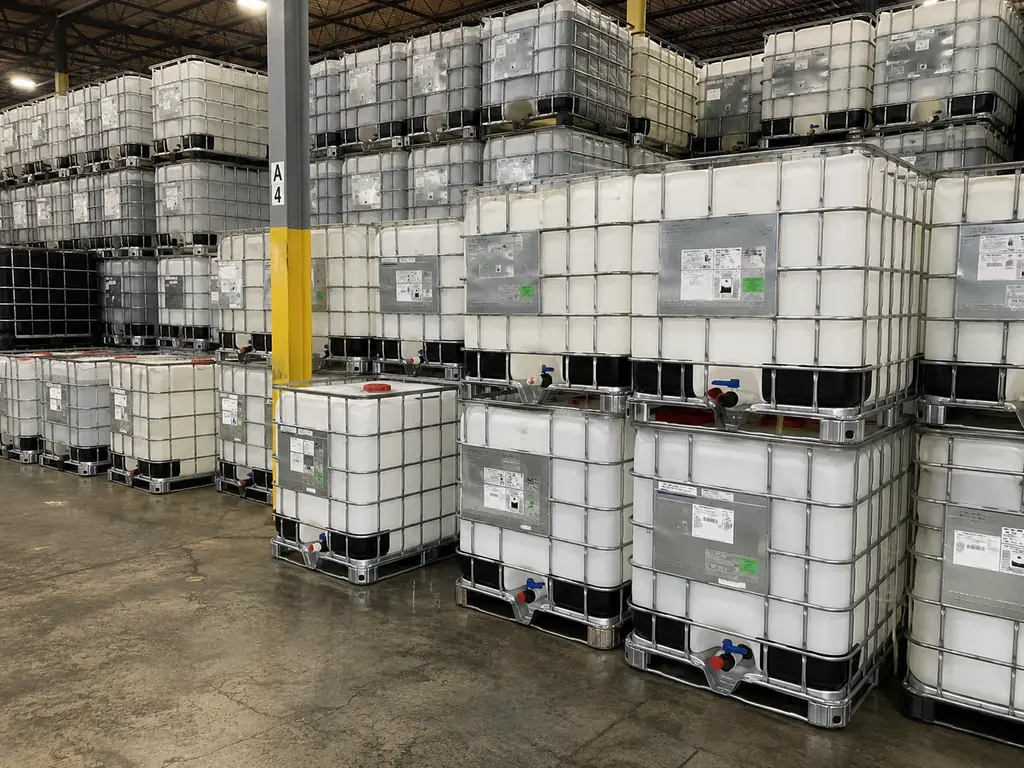
A single clean reconditioned IBC tote in the foreground of a warehouse, with stacks of further containers receding behind it
One container, eight livesA well-managed container sees four to eight service lives. The cage usually outlives three bottles.
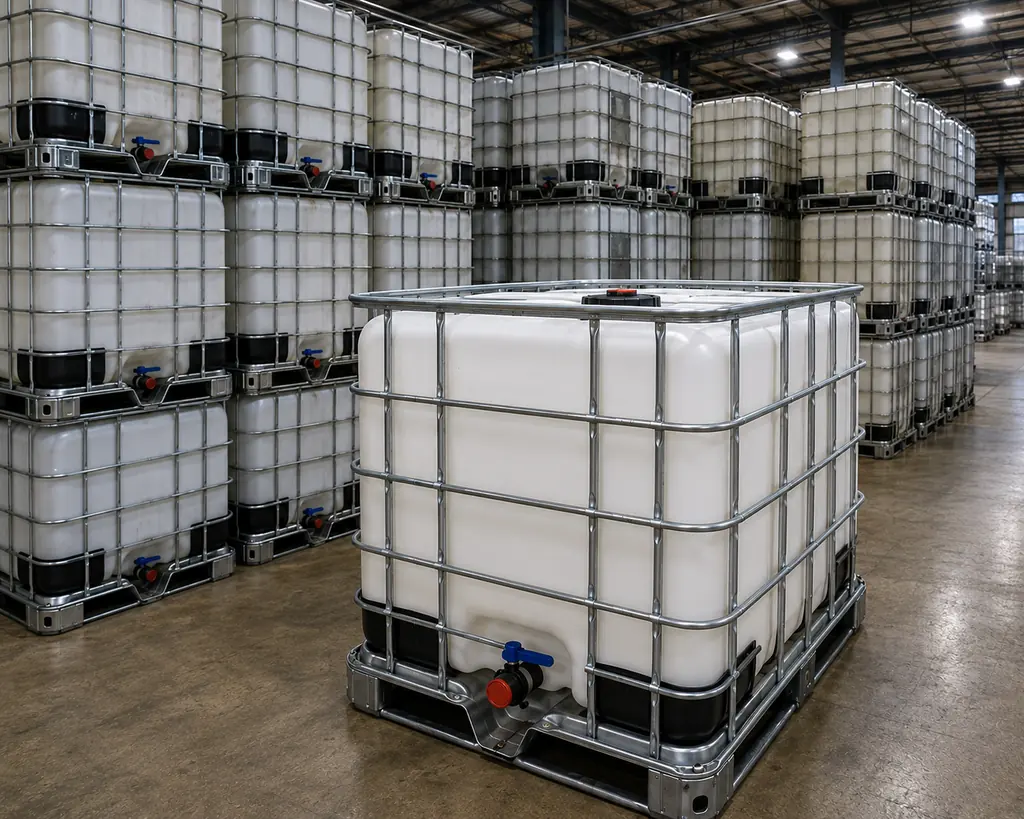
IBC totes stacked two and three high inside a warehouse, filling the frame in long rows either side of an aisle
Two high filledTwo high filled is the ceiling. Three high is empties only — HDPE creeps under sustained load.

?Common questions

Questions people actually ask

How quickly can you collect?

Inside the Austin metro, usually within three business days. Houston, San Antonio and DFW run on a weekly routing pattern, so it depends where we are that week — often faster than you expect because we are looking for backhaul.

Do I need a forklift?

Someone does. Our trucks carry straps and our drivers are trained to load, but a moffett-equipped trailer is not on every run. Tell us on the form whether you have a forklift and an operator and we will send the right equipment.

Will you take just two or three?

At the yard, yes, any time. For collection we need enough units to justify the trip unless you are inside Austin. Two totes in Amarillo is a lovely gesture but the diesel costs more than the totes.

What if my totes held something I cannot name?

Then say so. We would rather grade them as unknown and pay scrap value than be told a comfortable story. Unknown residue is a normal, common situation — an undisclosed one is a serious problem for whoever fills the tote next.

»Keep reading